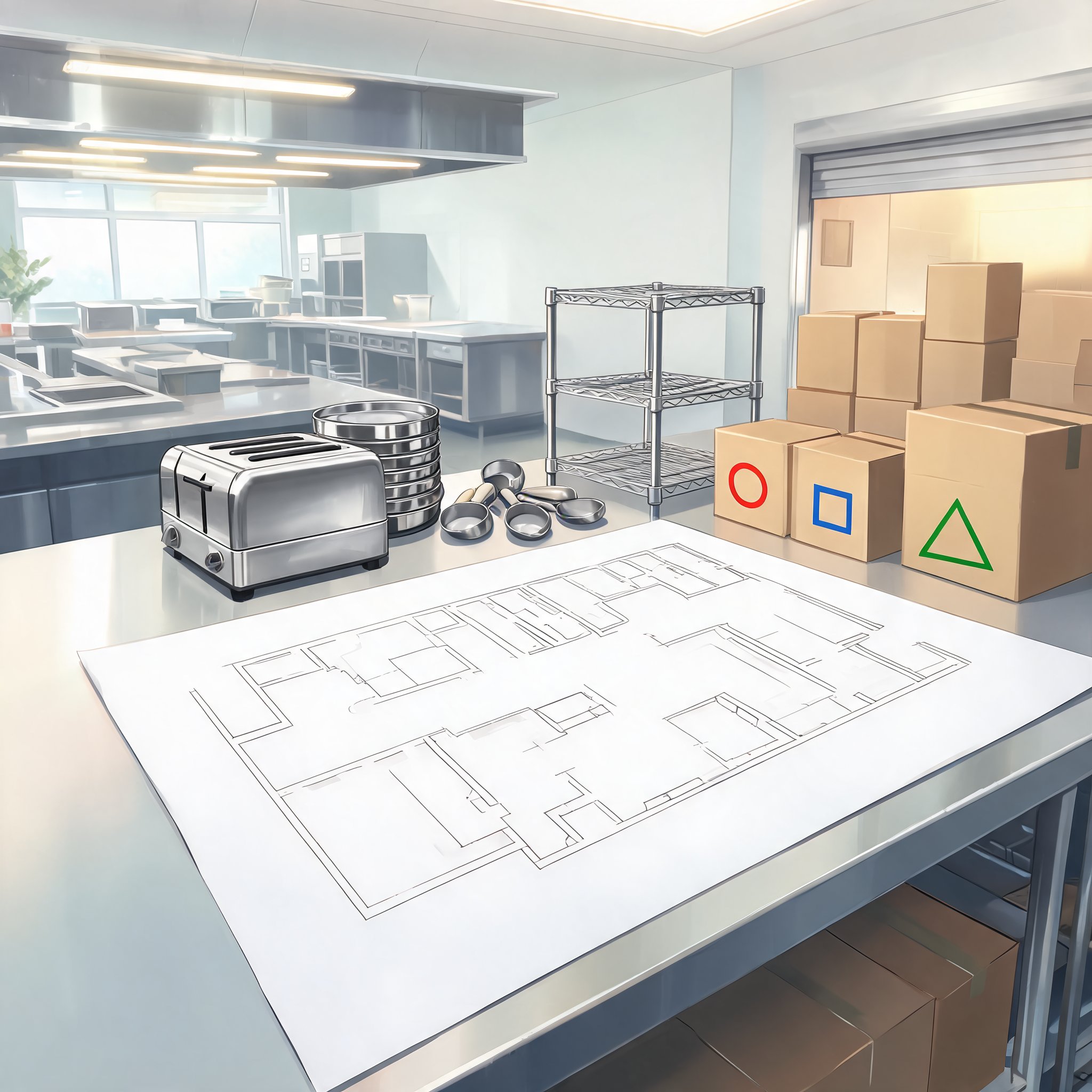
Rolling out new equipment for a menu launch involves more than choosing a machine, according to Bryan Musgrove, divisional senior director on national accounts for TriMark USA. Musgrove, who has worked on many equipment rollouts tied to new menu items, outlined practices intended to make multi-location deployments smoother. The work starts with site-level planning and continues through production scheduling and delivery packaging.
Map each location before ordering
Musgrove recommends creating a rollout playbook that covers every location. A restaurant brand adding toasted sandwiches to a breakfast lineup of biscuits and wraps needed new toasters, but the sites were not uniform. In some locations, electrical capacity was already maxed out, he said. Small mall or urban units might lack the counter space for a toaster, requiring shelving or an additional table to create room, which can affect workflow. The playbook should distinguish sites that can accept the equipment with little extra work from those that need additional support.
Build the schedule around manufacturer lead time
Production capacity should drive the timeline. Musgrove described a manufacturer that might be able to produce 200 units, but the key question is how long that will take. At a rate of 10 units per week, 200 units would take 20 weeks. In another case, the manufacturer might have inventory for the first 50 units, then need to order parts from overseas, adding eight weeks before it can complete the rest. For a menu item tied to a seasonal or occasion-based marketing campaign, the plan should be built backward from the desired launch date so the schedule is achievable.
Consolidate smallwares by location
Packaging can create unnecessary work at store level. Instead of shipping smaller wares directly to locations in their original boxes, operators can ask their dealer to consolidate and repackage the items into one package per location. TriMark worked with a brand adding macaroni and cheese to its sides. The rollout required visual holding cabinets, pans and serving scoops in varying sizes. TriMark combined the items into one package for each location, including instructional materials and exterior labeling so managers knew what they were receiving.
Plan for the full set of equipment
The examples show that a menu addition may require more than the central cooking machine. The toasted-sandwich project depended on toasters and, in some sites, changes to the surrounding workspace. The mac-and-cheese addition involved holding cabinets and serving tools as well as the food item. Planning for the complete set of equipment and wares, rather than only the most visible piece, is part of the approach.
Coordination across the rollout
These practices address different stages, but they share a planning logic: understand site constraints before equipment arrives, align delivery dates with manufacturing realities, and reduce the number of packages and decisions at the store. Musgrove's account focuses on execution rather than equipment specifications. The aim is to avoid a rollout stalling because a location lacks power or space, because the schedule ignores production limits, or because smallwares arrive in a scatter of boxes.
According to Musgrove, following these practices can help ensure a smooth rollout. TriMark positions the steps as a way to support execution across locations; the broader aim is for the new menu item to generate interest and increase traffic if the plan goes as intended.