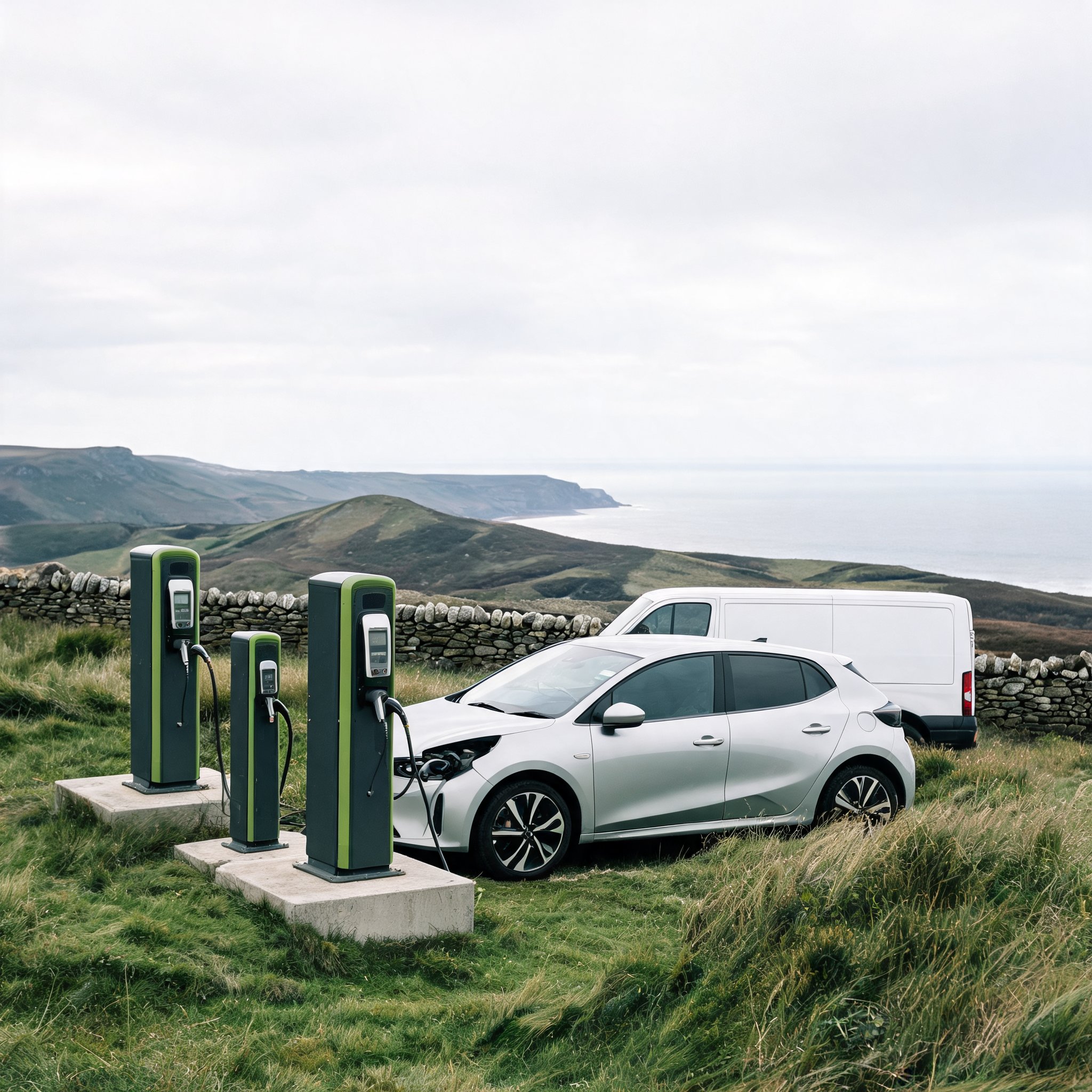
Northumberland County Council has passed a motion to add 36 public electric vehicle charging points at 26 locations, expanding the council’s existing charging network in the northeast English county.
The council said 78 per cent of the new charge points will be installed on land it owns. The remaining chargers will be placed on land owned by third parties under licensing agreements. The 36 points are described as public charge points, and the motion covers 26 locations. Most of the new infrastructure will therefore sit on council-owned land, with the rest delivered through third-party site agreements.
The charging infrastructure is being financed with just over £1 million in external funding from the City Region Sustainable Transport Settlement. The funding will be used to roll out the charge points until 2029.
Revenue generated by the chargers will be used to meet their running costs, management and maintenance. Northumberland County Council has an in-house EV team that will install and maintain the equipment, keeping deployment and day-to-day operation within the council.
Richard Wearmouth, the council’s cabinet member with responsibility for transport, said: “It’s great to see more investment towards improving EV charging provision in Northumberland. We have one of the largest road networks in the country, and it is vital that we ensure we have the necessary facilities to help people get around.” The comment links the charge-point expansion to the council’s responsibility for a large road network and to the practical needs of drivers.
Northumberland is a largely rural and coastal county in northeast England, bordering Scotland and containing Hadrian’s Wall and Northumberland National Park. Its geography means residents and visitors can face long journeys between settlements, making the location and reliability of public charging infrastructure important. The announcement does not specify charger power ratings, connector types or a site-by-site timetable.
The new charge points follow other sustainable transport investment in the region. A few months before the announcement, 14 new BYD BD11 battery-electric buses entered service in Northumberland. The council’s latest move adds another element to the county’s electric transport provision, although it does not quantify expected usage, emissions savings or the number of vehicles the chargers are intended to support.
The project combines council-owned land, third-party licensing and an in-house delivery team. Delivery will involve installation and maintenance by the council’s EV team, with the confirmed plan covering 36 charge points at 26 locations. The external funding is scheduled to support the rollout until 2029, while revenue from the chargers is intended to cover their ongoing operating and management costs.