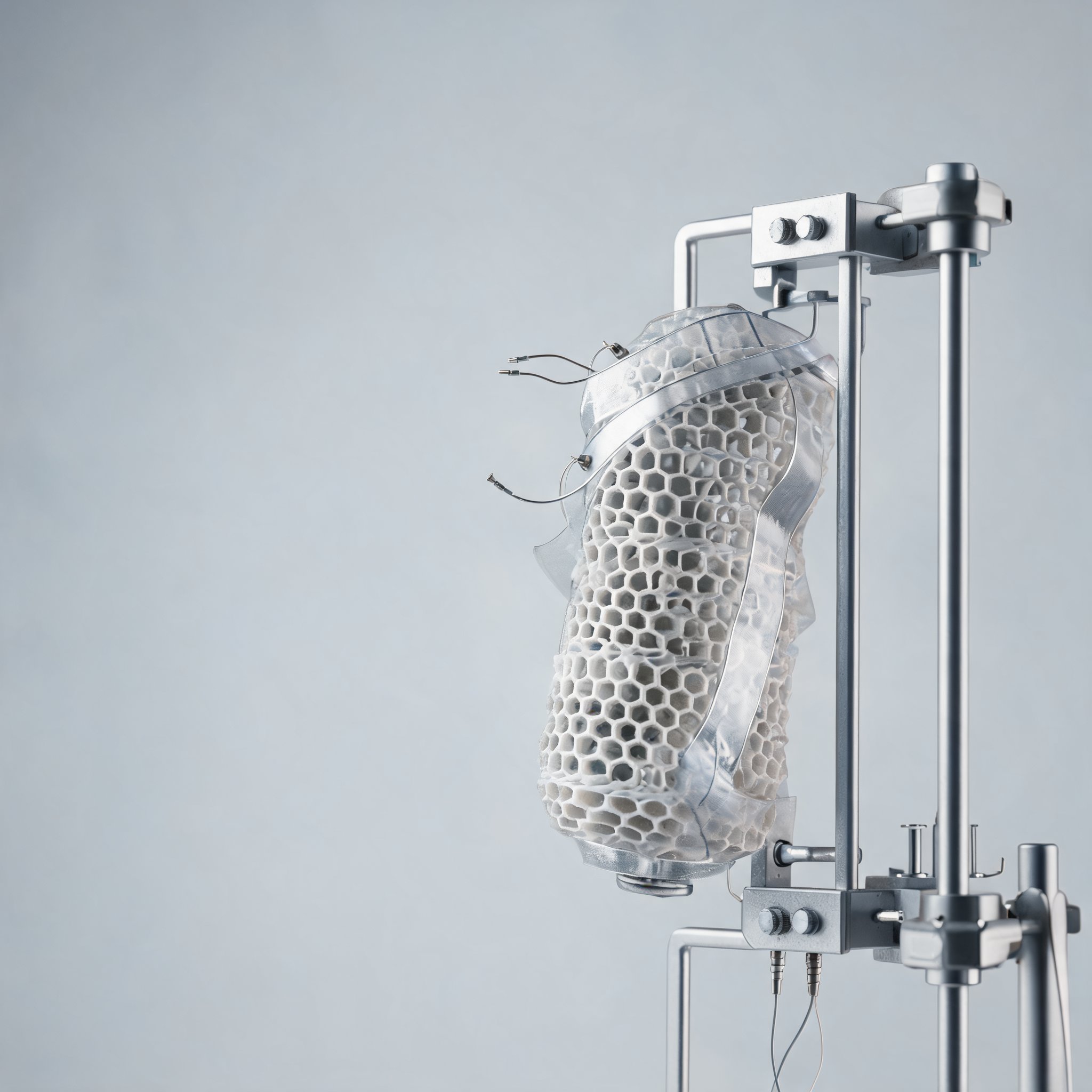
Meisam Abdi, a researcher at De Montfort University Leicester in the UK, has been awarded a 2026/27 Royal Academy of Engineering/Leverhulme Trust Research Fellowship to investigate whether 3D printing can produce artificial muscles for soft robots.
He is one of eight engineers in the UK to receive the award, which funds up to a year of research into materials and structures that could allow robots to move, sense and respond more like living organisms.
Engineering geometry rather than copying anatomy
Abdi's plan is not to reproduce the physical structure of a human muscle. Instead he intends to use additive manufacturing to build architected structures whose geometry itself delivers specific properties, with the design space opened up by changing both material and architecture.
Different combinations of piezoelectric, conductive and structural materials and architectures will be modeled with computer-aided engineering, then 3D printed and tested in the laboratory for how they respond to electrical stimulation.
The longer-term aims for such artificial muscles are threefold:
- producing movement;
- sensing the surrounding environment;
- harvesting small amounts of electrical energy from mechanical movement or vibration.
The piezoelectric trade-off
The project centres on piezoelectric materials, which can convert mechanical deformation into electrical energy and deform when an electric field is applied. According to DMU, existing high-performance piezoelectric materials are often stiff and brittle, and some of the most widely used ones contain lead, which complicates the development of soft, flexible and more sustainable artificial muscles.
Abdi's approach pairs material composition with specially designed 3D printed cellular structures, aiming to reach the required properties while keeping the result soft and flexible.
He argued that safe interaction between people and robots in settings such as hospitals depends on moving away from completely rigid structures and finding ways to give machines some of the attributes seen in living systems. Biological systems, he noted, are notable for combining movement, sensing and responses to external stimuli, and the open question is whether an artificial structure can reproduce some of those functions.
He also drew a line between this work and straightforward imitation of nature: the aim is not to copy something that already exists, but to see whether changing materials and geometry can create properties that do not currently occur naturally.
Abdi described the project as ambitious, noting that soft robotics already attracts substantial research effort but that replicating the multiple functions of living muscle remains a major challenge. His stated ambition for the fellowship is to build a prototype that demonstrates what is possible and provides a foundation for further research.